
Rakesh Jhunjhunwala sounded another note of caution on the nature of the latest bull run.

Life Insurance Corporation of India (LIC) February 8 for the first time ever crossed the Rs 7 trillion market capitalisation, as the stock price of state-owned insurer hit a new high of Rs 1,144,45, on rallying 10 per cent on the BSE. The board of directors of the Corporation are scheduled to meet today i.e. February 8, 2024, to consider a proposal for declaration of interim dividend for the financial year 2023-24 (FY24). The board will also consider and approve the unaudited financial results for the quarter and nine-month period ended on December 31, 2023.

To be fair, one year is too short a period to judge the schemes' performance.

'Especially if their investment horizon is over two years.'

The recent weakness in stock markets has provided an opportunity to buy quality stocks relatively cheaper

Edtech major Byju's top official on Wednesday said the company's $200 million rights issue has been fully subscribed and asked all shareholders to participate in the "renewed mission". Think and Learn Private Limited, which operates under Byju's brand name, has floated $200 million rights issue at less than 99 per cent enterprise valuation compared to its peak valuation of $22 billion. "Our rights issue is fully subscribed and my gratitude to my shareholders remains strong.

Infosys was the worst performer among the bluechips on both the key indices.

In October, the contribution through SIPs rose to Rs 79.85 billion, up 42% compared to the same month last year.

Foreign portfolio investors, on the other hand, have been net sellers in the markethaving pulled out Rs 8,600 crore

'The market should maintain optimism on the back of range-bound oil prices, a robust fiscal balance sheet, a better-than-expected monsoon, and moderating inflation.'

The growth will happen in the asset management market, as the Indian population is richer and economy would continue to grow.
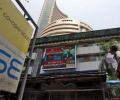
The BSE's arm Asia Index has announced Wipro will replace Bajaj Auto in the 30-share Sensex. The move is part of a semi-annual rebalancing exercise and will take effect when the market opens for trading on December 20. On account of the rejig, Wipro will see buying by passive funds to the tune of Rs1,300 crore, while Bajaj Auto will see selling of Rs 636 crore, estimate analysts.

As many as 31 mainboard IPOs raised a cumulative Rs 26,272 crore in this period, according to Prime Database. During the April-September 2007 bull run, 48 IPOs totalling Rs 21,243 crore were launched. The number of deals in H1FY24 was 2.2 times that of the same period of the last fiscal year, but the amount raised was 26 per cent lower.

Brokerages have lowered the price targets of asset management companies (AMCs) since they failed to beat revenue growth expectations in the January-March quarter (fourth quarter, or Q4) of 2022-23 (FY23). The regulator's plans to lower the fee charged by AMCs also added to concerns. While HDFC AMC and Nippon Life India AMC reported modest growth in revenue from operations in Q4FY23, UTI AMC and Aditya Birla Sun Life AMC delivered yet another weak quarter.

Omkeshwar Singh, head, Rank MF, a mutual fund investment platform, answers your queries.

Joydeep Ghosh takes stock of personal finances after the life-altering surprises of 2016.

Monday's steep fall turned Sensex's yearly returns to - 2.57%, but only two large-cap funds did worse.

Underweight on the sector since January amid concerns over growth prospects; no early reversal seen

Investors sinking lump sum money in equities seem to have applied the brakes.

'Forget your loss or profit in your portfolio.' 'Look at how much cash you have in hand.' 'If you don't have cash in hand, liquidate at least partially; get into about 20 per cent in cash.'

The country's mutual fund industry posted five per cent growth in average assets under management (AUM) to touch all-time high of Rs 8.68 lakh crore in May on the back of strong inflows into money market and income funds.
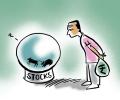
Swift gains on Dalal Street this year have also led to a sharp surge in shares of equity market intermediaries like depositories, exchanges, and registrar and transfer Agents (RTAs). The stock prices of BSE, CDSL, CAMS, and KFin Technologies are up 24-283 per cent so far in 2023 when compared to a 9 per cent rise in the benchmark Nifty index. With the market buoyancy expected to keep up the pace, analysts believe these stocks are a good long-term bet despite the sharp rally, which can trigger an intermittent correction.
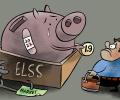
These funds can fetch double-digit returns over the long term which debt tax-saving products can't.

Polarisation and the increase in index weight of a few a stocks have weighed on performance. The worst performers include Nippon India Large Cap and HDFC Top 100 (2.6 per cent).

Funds like Taurus Starshare capitalise on market conditions by holding concentrated portfolios and taking on higher risk, but this only reveal a part of the true picture.
Three MFs - Benchmark, Lotus and Tata MF - have filed draft offer documents for their upcoming banking sector schemes.
Our advice for investors give the fund a miss for now; evaluate the fund's performance over the 3-Yr period and based on the same, consider making an investment in the fund, when in turns open-ended. Our rationale is fairly simple.

While FMPs no longer offer the same short-term advantage, it is still a good product for the medium term.

IndusInd Bank was the top gainer in the Sensex pack, rallying over 15 per cent, followed by Bajaj Finance, HDFC, Axis Bank, ICICI Bank, M&M and SBI. On the other hand, Sun Pharma, Nestle India, NTPC, HCL Tech and Bajaj Auto were among the laggards.

Illustration: Uttam Ghosh/Rediff.com After a brief respite at the year's start, FPIs have dumped shares worth more than $5.7 billion (Rs 42,596 crore), taking the cumulative net outflows since October to $10.5 billion (Rs 78,466 crore), and adding to the volatility on the bourses. The figure would have been a lot worse had it not been for net purchases to the tune of $5.7 billion in the primary market from October to date.

As with TCS, most companies put their money in mutual funds, corporate bonds and bank deposits, which are losing their appeal versus government bonds in terms of both returns and safety.

With Housing Development Finance Corporation's (HDFC's) merger with HDFC Bank becoming effective on July 1, the merged entity is set to become the top weight in the benchmarks S&P BSE Sensex and the National Stock Exchange Nifty indices, dislodging the country's most valuable company, Reliance Industries (RIL), from its perch. HDFC will stop trading after July 13. At present, RIL has a weighting of close to 12 per cent in the Sensex and 10.3 per cent in the broad-based Nifty. Meanwhile, HDFC Bank and HDFC have weights of 9.9 per cent and 6.8 per cent in the Sensex and 8.8 per cent and 6 per cent in the Nifty, respectively.

'If individual stocks start falling 25% to 30% or more, then I doubt how many of them will be able to withstand that (kind of selloff). That is when you'll see panic coming in.'
Move over equity markets, mutual funds and bonds. Investors across India are these days picking up and trading in the latest investment avenue in town: the Gold Exchange Traded Funds.

For existing investors, it may be prudent to redeem their current investments in gilt or dynamic schemes and invest it in short-term funds, if the exit load is not very high, advises Malhar Majumder.

For investors, every cost-saving means higher returns.
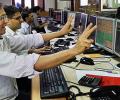
Only if you are a conservative investor satisfied with index returns; but over long term actively managed funds give better returns in Indian markets

The recent circular follows the 'true-to-label' concept, but large funds in the multi-cap category may be forced to merge in the absence of sufficient small-cap options.

Technology firm Wipro has a "high probability" of getting included in the benchmark Sensex, while two-wheeler major Bajaj Auto is the "most likely" deletion candidate, according to an analysis done by Brian Freitas, an analyst at independent research provider Smartkarma. The changes to the index will be announced mid-November, and will become effective from December 17. The December review uses the 6-month average market capitalisation and trading turnover data between May 1 and October 31 to determine changes.
 © 2026 Rediff.com - Advertise with us - Disclaimer - Privacy Policy - Sitemap - Feedback - About us - Terms of use - Grievances